
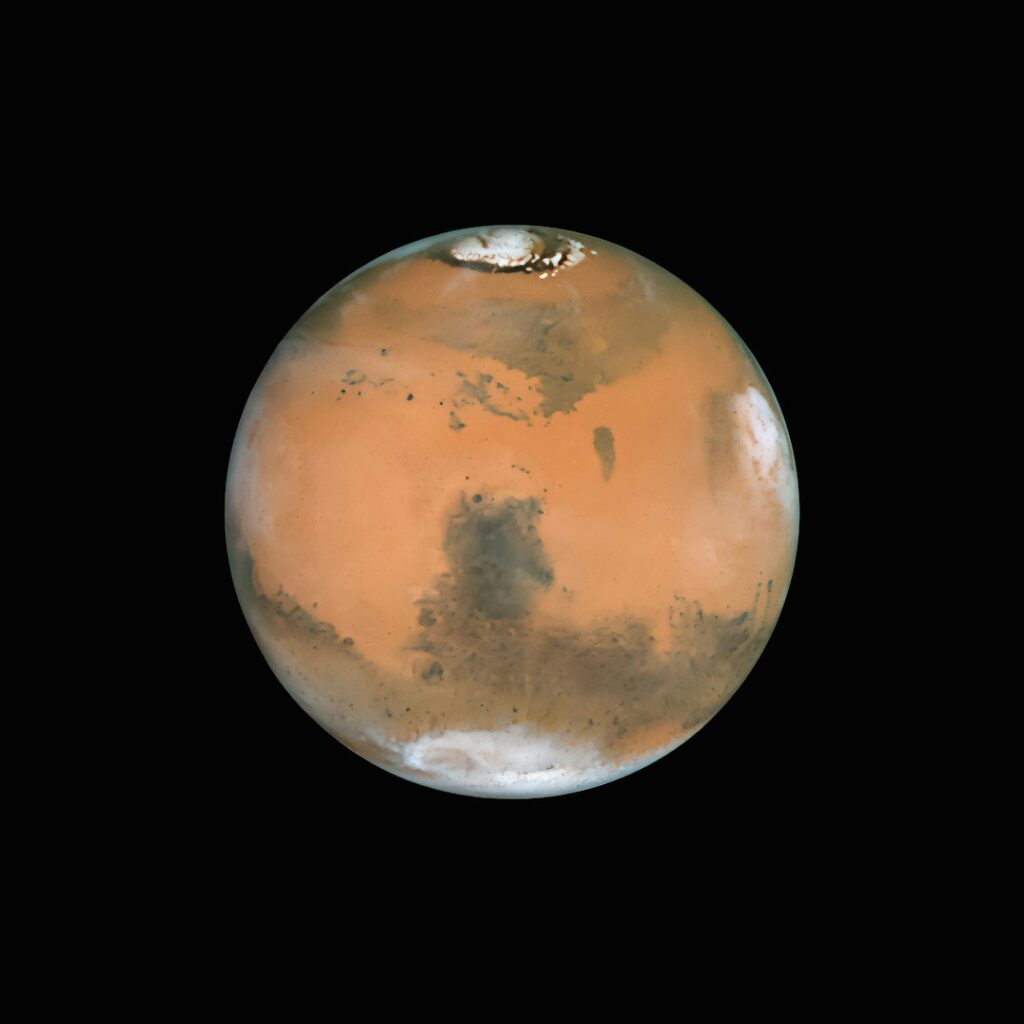
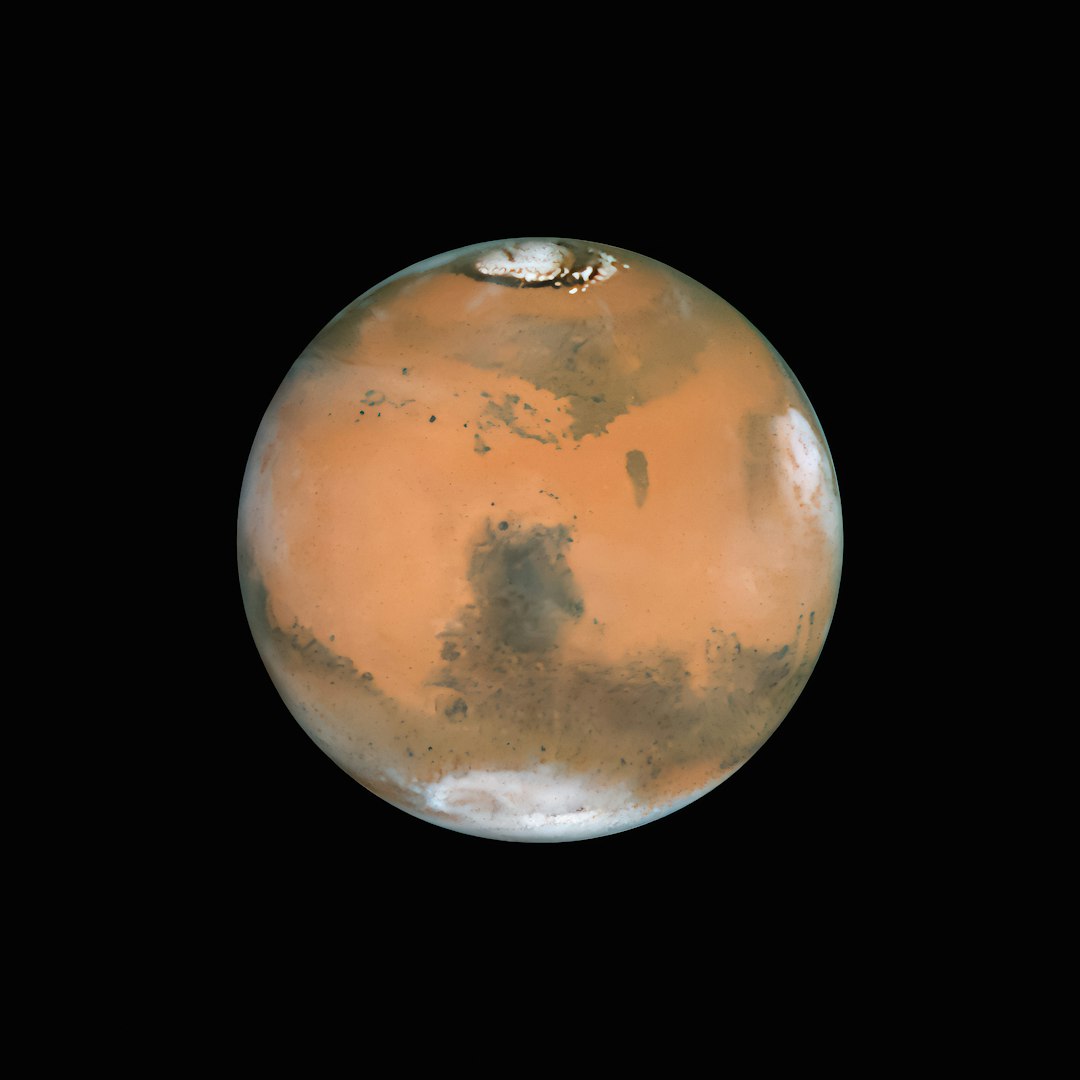
When NASA’s Opportunity rover sent its final transmission in 2018, engineers translated it as “My battery is low and it’s getting dark” — a paraphrase, not the literal words, but one that captured how a machine built for 90 days had survived nearly 15 years on another planet. The Mars rovers are the closest humanity has come to walking the surface of another world, rolling across ancient riverbeds and drilling into rock that has not seen liquid water for billions of years. This is Guide № 005 in The Love Space Guide series.
Get the Full Collectible Guide (Free PDF)
The Mars Rovers — in a beautifully designed, printable booklet. The Love Space Guide № 005.
Five Rovers, Six Decades of Ambition
NASA has successfully landed and operated five rovers on Mars: Sojourner (1997), the twin Spirit and Opportunity (both 2004), Curiosity (2012), and Perseverance (2021). Sojourner was roughly the size of a microwave oven and travelled only about 100 metres in total. Perseverance, by contrast, is about the size of a small car, weighs close to a tonne, and carries 23 cameras. Each generation was designed to answer a sharper question than the last — from “can we drive on Mars at all?” to “was this planet ever habitable, and can we cache samples to bring home?”
The two most famous survivors, Spirit and Opportunity, were each built for a 90-Martian-day mission. Spirit kept working for about six years before getting stuck in soft soil; Opportunity lasted until a planet-wide dust storm in 2018 blocked the sunlight its solar panels needed. We still find it remarkable that hardware warrantied for three months returned science for well over a decade.
How You Actually Land a Rover
There is no single way to set a rover down. Sojourner and the twin rovers used airbags — the spacecraft inflated a cluster of protective balloons, bounced across the surface dozens of times, and rolled to a stop before deflating. That method could not scale to something as heavy as Curiosity. For the heavier rovers, NASA developed the Sky Crane: a rocket-powered descent stage that hovers above the surface and lowers the rover on nylon tethers, then flies away to crash at a safe distance.
Every landing must be fully automated. Radio signals take between roughly 5 and 20 minutes to travel between Earth and Mars depending on the planets’ positions, so by the time engineers hear that atmospheric entry has begun, the rover has already landed — or not. Mission teams call this stretch the “seven minutes of terror,” and the spacecraft must execute thousands of steps entirely on its own.
Nuclear Batteries and the Problem of Dust
The early rovers ran on solar panels, which made them hostages to Martian weather. Dust settling on the panels gradually starved them of power, and only occasional wind gusts — informally called “cleaning events” — bought extra time. Curiosity and Perseverance sidestep this entirely with a Multi-Mission Radioisotope Thermoelectric Generator, which converts the heat from decaying plutonium-238 into electricity. This lets them work through dust storms and Martian winters, and it supplies warmth to keep sensitive electronics from freezing in temperatures that routinely drop below −70°C.
The Search for Water, and for Life
The guiding phrase of Mars exploration has long been “follow the water.” Opportunity found mineral evidence — including small spheres nicknamed “blueberries,” rich in the iron oxide hematite — that pointed to a wet past. Curiosity confirmed in Gale Crater that the site once held a lake with water chemistry that could, in principle, have supported microbial life. Perseverance is now working in Jezero Crater, which shows the fan-shaped deposits of an ancient river delta, exactly the kind of place where signs of past life might be preserved.
Perseverance is doing something no earlier rover could: sealing rock and soil samples in sterile tubes and leaving them on the surface. The long-term plan, a joint effort with the European Space Agency, is for a future mission to collect those tubes and return them to Earth — where laboratory instruments far larger than anything a rover can carry could examine them for traces of ancient biology.
A Helicopter That Was Never Supposed to Last
Perseverance carried a passenger: Ingenuity, a small helicopter meant only to prove that powered flight was possible in an atmosphere about 1% as dense as Earth’s. Its goal was five short flights. Instead it flew 72 times over roughly three years before a hard landing damaged its rotor blades and ended its career. Ingenuity became the first aircraft to achieve controlled, powered flight on another planet, and it turned a technology demonstration into a genuine scout for the rover below.
Myths Worth Retiring
Myth: The rovers are driven in real time with a joystick. They are not. Because of the radio delay, drivers plan a day’s movements in advance and send them as a batch of commands; the rover then executes them using onboard hazard-avoidance software. A day’s drive is often only tens of metres.
Myth: Opportunity literally said “My battery is low and it’s getting dark.” That widely shared line is a poetic translation by a journalist of the rover’s final technical data, not a message the rover composed. It was true in spirit — the dust storm had cut off its power — but the rover does not speak in sentences.
Myth: The famous colour photos show Mars exactly as your eye would see it. Many published images are processed, sometimes in “white-balanced” versions that show the rocks as if lit by Earth sunlight, to help geologists compare minerals. The true Martian sky is closer to a dusty butterscotch than the deep blue or vivid red often imagined.
Frequently Asked Questions
How fast can a Mars rover actually drive?
Extremely slowly by earthly standards. Top speeds are only a few centimetres per second, and real progress is far slower because the rover pauses constantly to photograph the terrain and check for hazards. Curiosity and Perseverance typically cover somewhere in the range of tens to a couple of hundred metres on a good driving day.
Are any rovers still working on Mars right now?
Yes. Curiosity has been operating since 2012 and Perseverance since 2021, both powered by nuclear generators rather than solar panels. Spirit, Opportunity and Sojourner have all ended their missions, and the Ingenuity helicopter stopped flying in early 2024.
Why send rovers instead of astronauts?
Cost, risk and endurance. A rover needs no air, food or return trip, and it can work for years in radiation and cold that would be lethal to a person. Robotic missions are also how agencies map the terrain, test landing systems and locate resources — the groundwork that any future crewed landing would depend on.
More The Love Space Guides
The Love Space Guide is a numbered series — one tightly focused subject at a time, each with its own downloadable collectible edition. Guide № 001 is The Apollo 11 Moon Landing, Guide № 002 is How the International Space Station Actually Works, Guide № 003 is The Voyager Golden Record, Guide № 004 is Why Rockets Launch From the Equator, This is Guide № 005. More editions are on the way.
🚀 Join Love Space
Every week, get hidden stories, local secrets, and travel inspiration from people who live and love it.