
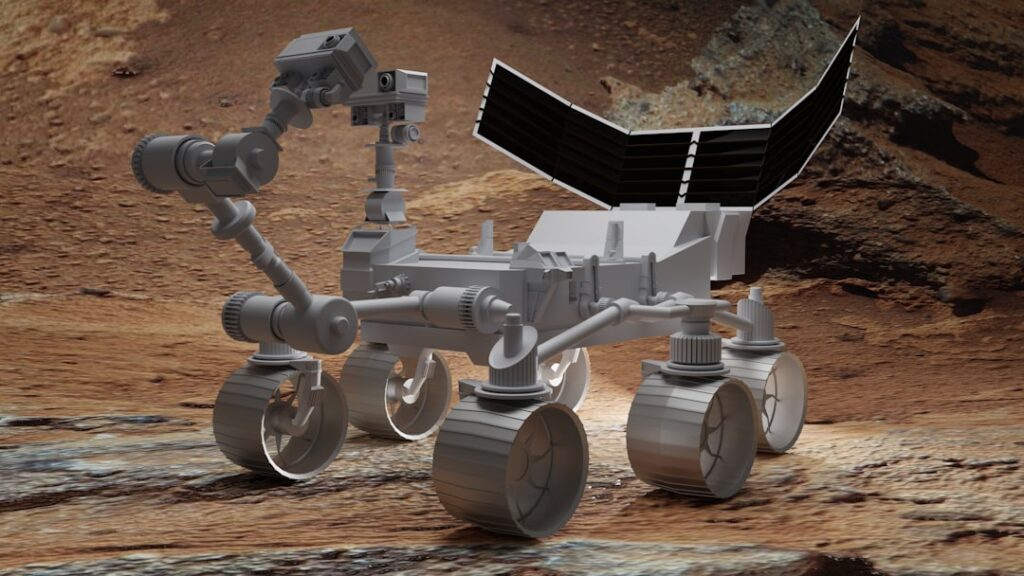
Mars has captivated humanity for centuries, but only in the last few decades have we truly begun to explore the Red Planet. Through a series of ambitious missions and incredibly resilient rovers, we’ve transformed Mars from a distant point of light into a world we know in intimate detail—complete with ancient riverbeds, towering volcanoes, and the tantalizing possibility of past life.
Today, multiple space agencies and private companies are racing to unlock Mars’s secrets and prepare for the first human footsteps on another planet. Here’s how we got here, what we’ve learned, and where we’re headed next.
The Rover Revolution: Wheels on Mars
NASA’s rover program began in 1997 with Sojourner, a microwave-sized explorer that spent 83 sols (Martian days) proving that wheeled exploration of Mars was possible. It paved the way for Spirit and Opportunity, twin rovers that landed in January 2004. Opportunity, designed for a 90-day mission, operated for nearly 15 years and traveled over 28 miles, discovering definitive evidence that liquid water once flowed on Mars.
Curiosity, a car-sized rover that landed in Gale Crater in August 2012, took exploration to the next level. Equipped with a nuclear power source and a suite of sophisticated instruments including a laser spectrometer and drill, Curiosity confirmed that Mars once had the chemical ingredients necessary for life. It’s still operational today, climbing Mount Sharp and analyzing rock layers that tell the story of Mars’s transition from a warm, wet world to the cold desert it is now.
Perseverance, which touched down in Jezero Crater in February 2021, represents the current pinnacle of Mars rover technology. It carries 23 cameras, collects rock samples for future return to Earth, and brought along Ingenuity—the first helicopter to fly on another planet. Ingenuity has far exceeded its planned five flights, demonstrating that aerial exploration of Mars is feasible for future missions.
Beyond NASA: A Global Effort
Mars exploration isn’t just an American endeavor. The European Space Agency’s Mars Express orbiter has been studying the planet since 2003, mapping its surface and subsurface with ground-penetrating radar that revealed buried lakes of liquid water beneath the southern ice cap.
China made history in May 2021 when its Zhurong rover successfully landed in Utopia Planitia, making China only the second nation to operate a rover on Mars. Zhurong studied Martian geology and climate for nearly a year before entering hibernation.
The United Arab Emirates also joined the Mars club in 2021 with its Hope orbiter, which studies Martian weather patterns and atmospheric loss from a unique high-altitude orbit. India’s Mars Orbiter Mission (Mangalyaan) operated from 2014 to 2022, making India the first Asian nation to reach Mars orbit.
What We’ve Learned About the Red Planet
Decades of Mars missions have rewritten our understanding of the planet. Key discoveries include:
- Ancient habitability: Mars once had lakes, rivers, and possibly even an ocean. The chemistry and minerals discovered by rovers confirm that early Mars could have supported microbial life.
- Methane mysteries: Curiosity detected seasonal methane plumes that can’t yet be explained—they could be geological or, more intriguingly, biological in origin.
- Underground water: Multiple missions have confirmed water ice deposits just beneath the surface at mid-latitudes, a crucial resource for future explorers.
- Thin atmosphere: Mars lost most of its atmosphere billions of years ago when its magnetic field collapsed, allowing solar wind to strip it away—a process still ongoing today.
- Dust and weather: Global dust storms can engulf the entire planet, and local dust devils regularly clean (or coat) rover solar panels.
The Race Ahead: Humans to Mars
The next major milestone is Mars Sample Return, a joint NASA-ESA mission planned for the early 2030s that will retrieve the rock samples Perseverance is currently collecting and bring them to Earth for detailed analysis. These samples may finally answer whether life ever existed on Mars.
SpaceX is developing its Starship rocket specifically with Mars in mind. CEO Elon Musk has stated the goal of landing humans on Mars by the early 2030s, though that timeline remains ambitious. NASA’s human Mars mission is currently targeted for the late 2030s or 2040s, following the Artemis lunar program that will test deep-space technologies.
Before humans arrive, several precursor missions are planned. NASA’s Mars Ice Mapper orbiter will help locate the best water ice deposits for future crews, while proposed missions would demonstrate producing fuel from the Martian atmosphere—essential for return trips.
The challenges are immense: radiation exposure during the six-month journey, landing large payloads on Mars, producing food and fuel locally, and keeping crews healthy in low gravity. But with each rover that touches down and every sample analyzed, we move closer to making humanity a multi-planet species.
Want to follow the latest Mars discoveries and mission updates? Subscribe to the Love Space newsletter and get one cosmic idea delivered to your inbox each day.