
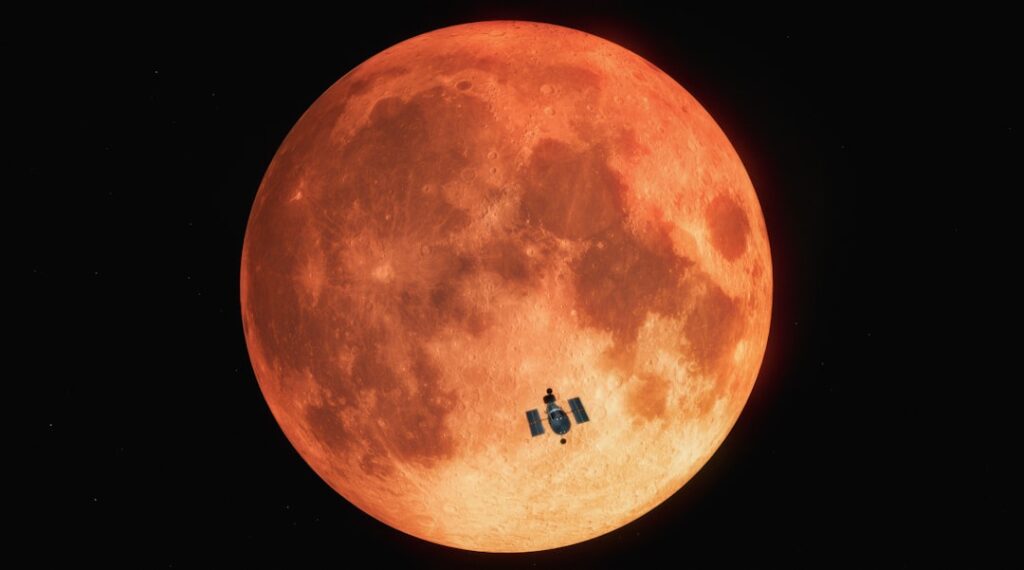
More than five decades after the last Apollo astronaut left the lunar surface, NASA is orchestrating humanity’s return to the Moon. The Artemis program represents the most ambitious lunar exploration initiative since the 1970s, with plans not just to visit, but to stay.
Named after the twin sister of Apollo in Greek mythology, Artemis aims to land the first woman and first person of color on the Moon, establish a permanent human presence in lunar orbit, and build the foundation for crewed missions to Mars.
The Artemis Missions: A Phased Approach
The Artemis program unfolds in carefully planned stages. Artemis I, an uncrewed test flight completed in late 2022, sent the Orion spacecraft on a 25-day journey around the Moon, validating critical systems including the heat shield that must withstand temperatures of 5,000 degrees Fahrenheit during reentry.
Artemis II, scheduled for September 2025, will carry four astronauts on a lunar flyby—the first crewed mission beyond low Earth orbit in over 50 years. Commander Reid Wiseman, pilot Victor Glover, mission specialists Christina Koch and Jeremy Hansen will spend approximately ten days testing Orion’s life support systems and manual flight controls.
The landmark mission is Artemis III, currently targeting 2027. This mission will return humans to the lunar surface for the first time since Apollo 17 in 1972. Unlike Apollo’s brief surface stays, Artemis III astronauts will spend nearly a week at the lunar south pole, conducting extensive scientific research in a region that may harbor water ice in permanently shadowed craters.
The Hardware: SLS, Orion, and Starship HLS
The Space Launch System (SLS) rocket stands as the most powerful launch vehicle ever built for human spaceflight. The Block 1 configuration generates 8.8 million pounds of thrust at liftoff—15 percent more than the Saturn V. Standing 322 feet tall, SLS can carry the Orion spacecraft and its astronauts beyond Earth’s orbit with enough velocity to reach the Moon in just days.
The Orion spacecraft serves as the crew vehicle, featuring a pressurized capsule for up to four astronauts and the European Service Module, provided by ESA, which supplies propulsion, electrical power, and life support. Orion’s advanced navigation systems and radiation shielding address the unique challenges of deep space travel.
For the lunar landing itself, NASA selected SpaceX’s Starship Human Landing System (HLS). This spacecraft will wait in lunar orbit for Orion’s arrival, dock with the capsule, ferry astronauts to the surface, and return them to Orion for the journey home. At over 160 feet tall, Starship HLS dwarfs the Apollo lunar module and can deliver substantial cargo to support extended surface operations.
Gateway: A Lunar Outpost
Central to Artemis is the Lunar Gateway, a small space station that will orbit the Moon in a near-rectilinear halo orbit. This unique path allows Gateway to serve as a staging point for lunar landings while maintaining nearly continuous communication with Earth.
Gateway’s first two modules—the Power and Propulsion Element and the Habitation and Logistics Outpost—are scheduled for launch in 2025. Unlike the International Space Station, Gateway won’t be permanently crewed. Instead, astronauts will occupy it for months at a time during Artemis missions, using it as a base for surface expeditions and deep space research.
International partners including ESA, JAXA, and CSA are contributing modules and systems, making Gateway a truly global endeavor.
Science Goals: Why the South Pole?
The Artemis landing site at the lunar south pole represents a radical departure from Apollo’s equatorial locations. This region offers several advantages: areas of near-continuous sunlight for solar power, alongside permanently shadowed craters that may contain billions of tons of water ice.
Water ice isn’t just scientifically fascinating—it’s a resource. It can be split into hydrogen and oxygen for rocket fuel, provide drinking water, and generate breathable air. This makes the south pole ideal for sustainable exploration and a potential lunar base.
Artemis missions will also study the Moon’s geology, search for resources, test technologies for Mars missions, and conduct experiments impossible on Earth, from astronomy with radio telescopes on the far side to manufacturing in the Moon’s unique environment.
Beyond Artemis: Mars and the Future
NASA views Artemis as preparation for an even greater challenge: sending humans to Mars in the late 2030s or early 2040s. The Moon serves as a proving ground for the life support systems, habitats, power generation, and in-situ resource utilization technologies that Mars missions will require.
The journey from Apollo’s brief visits to Artemis’s sustainable presence marks a fundamental shift in how humanity approaches space exploration. We’re no longer just visiting the Moon—we’re learning to live and work there.
Want to follow every step of humanity’s return to the Moon? Subscribe to the Love Space newsletter and get one cosmic idea delivered to your inbox each day.