
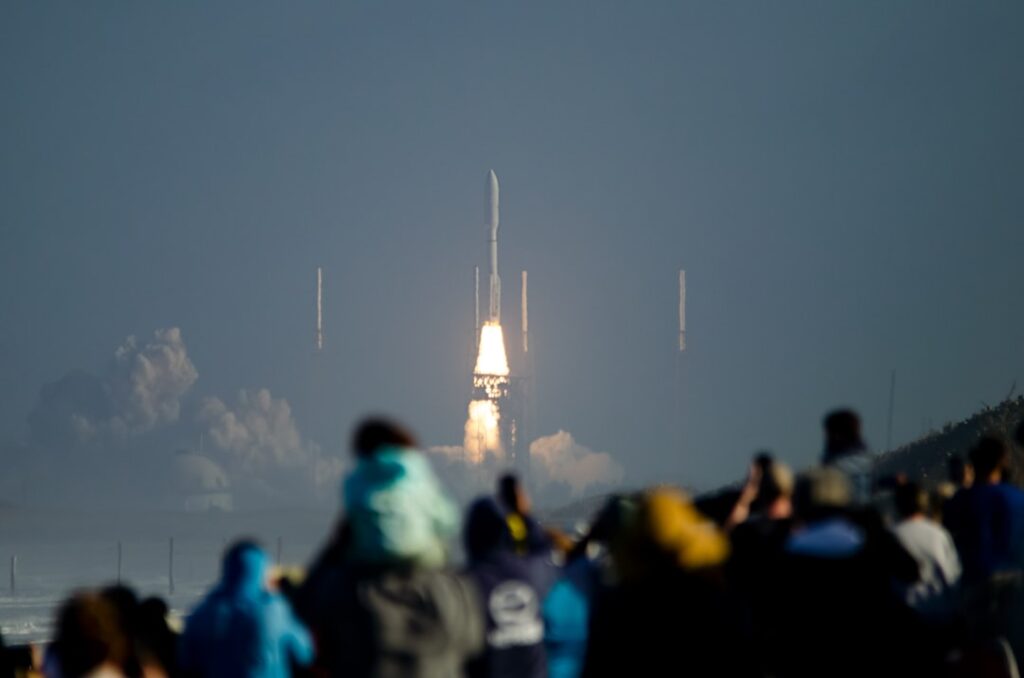
There’s nothing quite like watching a rocket launch in person. The ground shakes, the air crackles, and for a few breathtaking minutes you’re witnessing humanity’s most ambitious engineering feat unfold before your eyes. If you’ve never experienced a launch, or you’re planning your first trip to a launch site, here’s everything you need to know.
Where to Watch
The best rocket-watching locations in the United States are Florida’s Space Coast and Southern California. Kennedy Space Center and Cape Canaveral Space Force Station in Florida host the majority of U.S. launches, including SpaceX Falcon 9 and Falcon Heavy missions, NASA’s Artemis flights, and United Launch Alliance rockets. The Kennedy Space Center Visitor Complex offers paid viewing packages that get you within a few miles of the pad.
For free viewing, head to Jetty Park in Cape Canaveral, Playalinda Beach, or the town of Titusville along the Indian River. You’ll be 5 to 10 miles from the launch pads, close enough to feel the rumble and see incredible detail. Vandenberg Space Force Base in California launches polar-orbit missions, and beaches near Lompoc offer spectacular views, especially at sunset.
If you can’t make it in person, NASA and SpaceX both livestream launches in high definition, complete with expert commentary and multiple camera angles.
What to Bring
Comfort is key. Launches frequently scrub due to weather or technical issues, so bring folding chairs, sunscreen, snacks, and plenty of water. A wide-brimmed hat and binoculars enhance the experience—binoculars let you track the rocket longer as it climbs into the sky.
For photography, a smartphone works surprisingly well. Set your phone to video mode and record the entire sequence; you can pull stills later. If you have a DSLR or mirrorless camera, use a tripod, set a wide aperture, and shoot in burst mode. Don’t get so focused on the camera that you miss the real thing with your own eyes.
Download a launch-tracking app like Space Launch Now or Next Spaceflight. These apps provide real-time countdown clocks, launch windows, and notifications if the time changes. Launches rarely go off precisely on schedule, and a 10-minute delay can mean the difference between seeing it and missing it.
Understanding the Countdown
The final minutes before liftoff follow a choreographed sequence. Around T-minus 10 minutes, you’ll hear callouts for major milestones: the rocket switching to internal power, the launch director polling for go/no-go decisions, and the start of propellant loading if it hasn’t happened already.
At T-minus 1 minute, the tension builds. The flight computer takes control. At around T-minus 10 seconds for a Falcon 9, the engines ignite. You’ll see a brilliant flash of light and a growing cloud of steam and smoke. The rocket doesn’t lift off immediately—the hold-down clamps release only after computers verify the engines are producing full thrust.
Then it rises. Slowly at first, then faster and faster. If you’re close enough, the sound arrives several seconds after you see ignition, a deep, bone-rattling roar that’s less a noise and more a physical force. Car alarms go off. The air vibrates. It’s unforgettable.
What You’re Actually Seeing
As the rocket climbs, you’ll notice the exhaust plume changing shape and color. At low altitude, the plume is bright and relatively narrow. As the rocket ascends and air pressure drops, the exhaust expands into a wider, more diffuse shape. This is normal.
About 2 minutes and 30 seconds into a Falcon 9 flight, you might catch stage separation if skies are clear—a bright flash as the first stage detaches and the second stage engine ignites. If it’s a booster-recovery mission, keep watching. Several minutes later, you may see the first stage returning, flipping around and firing its engines to slow down for landing at Cape Canaveral or on a drone ship offshore.
For night launches, the spectacle is even more dramatic. The rocket lights up the sky like a second sun, casting long shadows and painting clouds orange and pink. As it climbs higher, it can remain visible for several minutes, a brilliant moving star arcing across the heavens.
Plan for Delays
Here’s the reality: roughly half of all launches scrub within 24 hours of the scheduled time. Weather is the most common culprit—upper-level winds, lightning, or thick clouds can force a delay. Technical issues, range conflicts, and even boats wandering into the safety zone can push a launch back by hours or days.
Build flexibility into your trip. If possible, arrive a day early and stay a day late. Check the weather forecast and the official launch status frequently. If the launch scrubs, it’s often rescheduled within 24 to 48 hours, giving you a second chance.
Despite the uncertainty, the payoff is worth it. Witnessing a rocket launch in person is a transformative experience, a visceral reminder that we live in an age when leaving Earth is routine. Once you’ve felt that rumble and watched fire and metal defy gravity, you’ll understand why so many of us keep coming back.
Want more cosmic wonder delivered to your inbox? Subscribe to the Love Space newsletter and get one fascinating space story every day.