
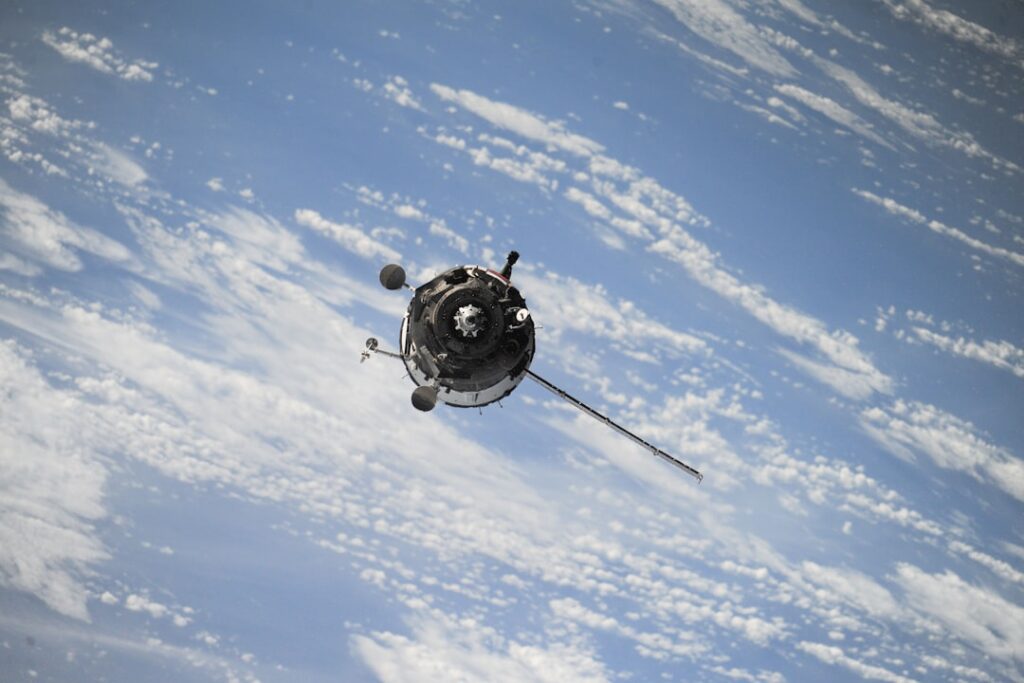
Space exploration has given us some of humanity’s most extraordinary achievements. Certain missions didn’t just succeed—they fundamentally changed how we see the universe and ourselves. Here are ten missions that rewrote the rules.
1. Sputnik 1 (1957)
The Soviet Union’s beach ball-sized satellite launched the Space Age. Sputnik 1 orbited Earth for three months, transmitting radio beeps that announced humanity had reached beyond our atmosphere. It sparked the space race and proved orbital spaceflight was possible.
2. Apollo 11 (1969)
Neil Armstrong and Buzz Aldrin walked on the Moon while Michael Collins orbited above. Apollo 11 fulfilled President Kennedy’s promise and demonstrated what coordinated human ingenuity could achieve. The 382 kilograms of lunar samples they returned continue to inform planetary science today.
3. Voyager 1 and 2 (1977–present)
Launched to explore the outer planets during a rare planetary alignment, the twin Voyager probes visited Jupiter, Saturn, Uranus, and Neptune. They revealed active volcanism on Jupiter’s moon Io, intricate structures in Saturn’s rings, and geysers on Neptune’s moon Triton. Voyager 1 entered interstellar space in 2012 and both spacecraft still transmit data from beyond our solar system’s edge.
4. Hubble Space Telescope (1990–present)
Despite a famously flawed mirror at launch, astronaut repair missions turned Hubble into our most productive observatory. It measured the universe’s expansion rate, photographed galaxies forming shortly after the Big Bang, and found evidence that supermassive black holes lurk in most galaxy centers. Its deep field images revealed thousands of galaxies in seemingly empty patches of sky.
5. Mars Pathfinder and Sojourner (1997)
NASA’s Pathfinder lander and its shoebox-sized rover Sojourner proved that affordable Mars exploration was possible. Sojourner’s 83-day mission demonstrated that wheeled robots could navigate the Martian surface, paving the way for Spirit, Opportunity, Curiosity, and Perseverance.
6. International Space Station (1998–present)
The ISS represents continuous human presence in space for over 25 years. This football field-sized laboratory has hosted more than 270 astronauts and cosmonauts from 23 countries. Experiments aboard the station have advanced medicine, materials science, and our understanding of long-duration spaceflight’s effects on the human body—knowledge essential for future missions to Mars.
7. Cassini-Huygens (1997–2017)
This joint NASA-ESA mission spent 13 years orbiting Saturn, transforming our understanding of the ringed planet and its moons. The Huygens probe landed on Titan, revealing methane lakes and weather systems on this hazy moon. Cassini discovered water geysers on Enceladus, making it a prime candidate in the search for extraterrestrial life.
8. New Horizons (2006–present)
After a nine-year journey, New Horizons flew past Pluto in 2015, revealing a geologically active world with nitrogen ice plains and water ice mountains. The mission showed us that even small, distant worlds remain dynamic. It continued to Arrokoth in the Kuiper Belt, giving us our first close look at a pristine remnant from the solar system’s formation.
9. Kepler Space Telescope (2009–2018)
Kepler discovered more than 2,600 confirmed exoplanets by detecting the tiny dimming when planets cross in front of their stars. It revealed that planets are common throughout our galaxy and that rocky worlds in habitable zones aren’t rare. Kepler’s data continues to yield discoveries years after the mission ended.
10. Mars Curiosity Rover (2012–present)
Curiosity’s one-ton, car-sized frame carried a sophisticated mobile laboratory to Gale Crater. It found definitive evidence that Mars once had conditions suitable for microbial life: ancient lakebeds, organic molecules, and the chemical building blocks necessary for life. The rover’s sky crane landing system was so successful that NASA used the same approach for Perseverance.
Looking Forward
These ten missions share a common thread: they asked bold questions and delivered answers that exceeded expectations. As the James Webb Space Telescope peers deeper into the universe, as Artemis prepares to return humans to the Moon, and as new robotic explorers head to ocean worlds like Europa, we’re building on foundations these missions established.
Want to stay connected to the missions shaping our cosmic future? Subscribe to the Love Space newsletter and get one cosmic idea delivered to your inbox every day.